
Is My Child’s Speech Normal? A Simple Guide by Age
It can be difficult to know whether your child’s speech is developing as expected. Some children talk early and clearly, while others take a little longer. This variation can make it hard to tell what is typical and when it might be worth seeking support.
This guide outlines what you can generally expect at different ages, along with some signs that may indicate your child would benefit from extra help.
What is “normal” speech development?
Children develop their speech and language skills at different rates, so there is a wide range of what is considered typical. While no two children follow exactly the same timeline, there are clear patterns that most children tend to follow as they learn to communicate.
Rather than focusing on exact ages or specific words, it is more helpful to look at whether your child is broadly progressing in line with these patterns.
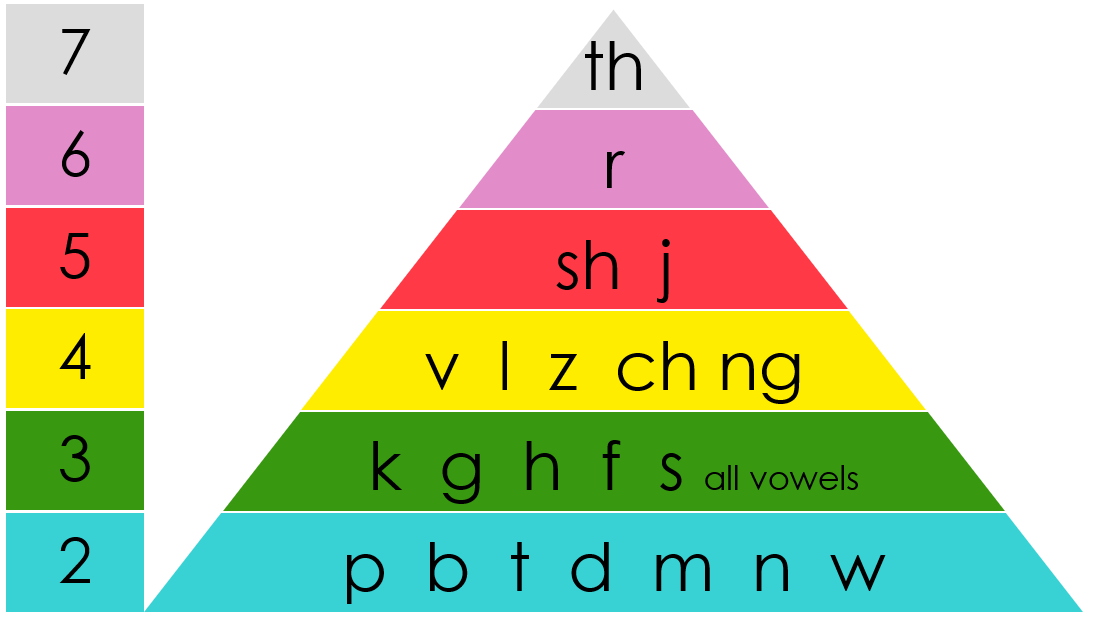
Typical ages for speech sound development.
This chart shows when most sounds are usually established. If your child’s speech is not clear beyond these age ranges, it may be worth seeking advice.
Source: Speech and Language UK
By age 1
Your child is starting to babble in a more speech-like way (e.g. “bababa”, “dadada”)
They may say one or two recognisable words (e.g. “mama”, “dada”)
They respond to their name and familiar voices
They understand simple words like “no”, “bye-bye”, or “milk”
They use gestures such as pointing, reaching, or waving
By age 2
Your child is likely using single words and starting to combine two words, such as “more juice” or “mummy go”
They may have around 50 or more words, although this can vary
Familiar adults can understand much of what they say, even if others find it harder
By age 3
Your child is using short sentences, typically 3 to 4 words
They are able to express basic needs, wants, and ideas
Familiar adults can understand most of what they say
Some speech sound errors are still common at this stage
By age 4
Your child is speaking in longer, more complex sentences
They can have simple conversations and talk about past events
Most of what they say should be understood by people outside the family
Some sounds (such as “r”, “th”, or blends like “sp” and “tr”) may still be developing
By age 5
Your child’s speech is mostly clear and easy to understand
They can tell simple stories and explain their ideas
They can follow more complex instructions
A small number of later-developing sounds may still not be fully accurate
By age 6
Your child’s speech should be clear in everyday conversation
They can explain events, give opinions, and retell stories in sequence
They are developing more advanced language, such as describing, reasoning, and using more complex sentences
Some sounds like “r” or “th” may still be refining, but should be improving
By age 7
Your child’s speech should be fully clear and easily understood
They can use language confidently to explain, question, and problem-solve
They understand and use more abstract language (e.g. time, cause, emotions)
All speech sounds should typically be established by this stage
When should I be concerned?
While variation is normal, there are some signs that may indicate your child would benefit from further support:
Limited babbling, gestures, or response to sound by age 1
Not combining words by around 2 to 3 years
Speech that is very difficult to understand after age 3
Ongoing unclear speech beyond age 5 to 6
Frustration when trying to communicate
A noticeable gap compared to peers
Loss of previously used words or skills
If something feels off, it is reasonable to trust that instinct.
What can you do next?
If you have concerns about your child’s speech or language:
Speak with your child’s nursery or school to get their perspective
Monitor progress over a short period
Consider a speech and language therapy assessment for a clearer understanding
An assessment can help identify whether your child is developing as expected and what support, if any, would be helpful.
Final thoughts
Children develop at different rates, but there are clear patterns that can guide expectations. Understanding these can help you feel more confident in recognising whether your child is on track.
If you’re unsure whether your child’s speech is developing as expected, a speech and language assessment can give you a clear answer and next steps.
You can get in touch here to discuss your concerns or book an assessment.